
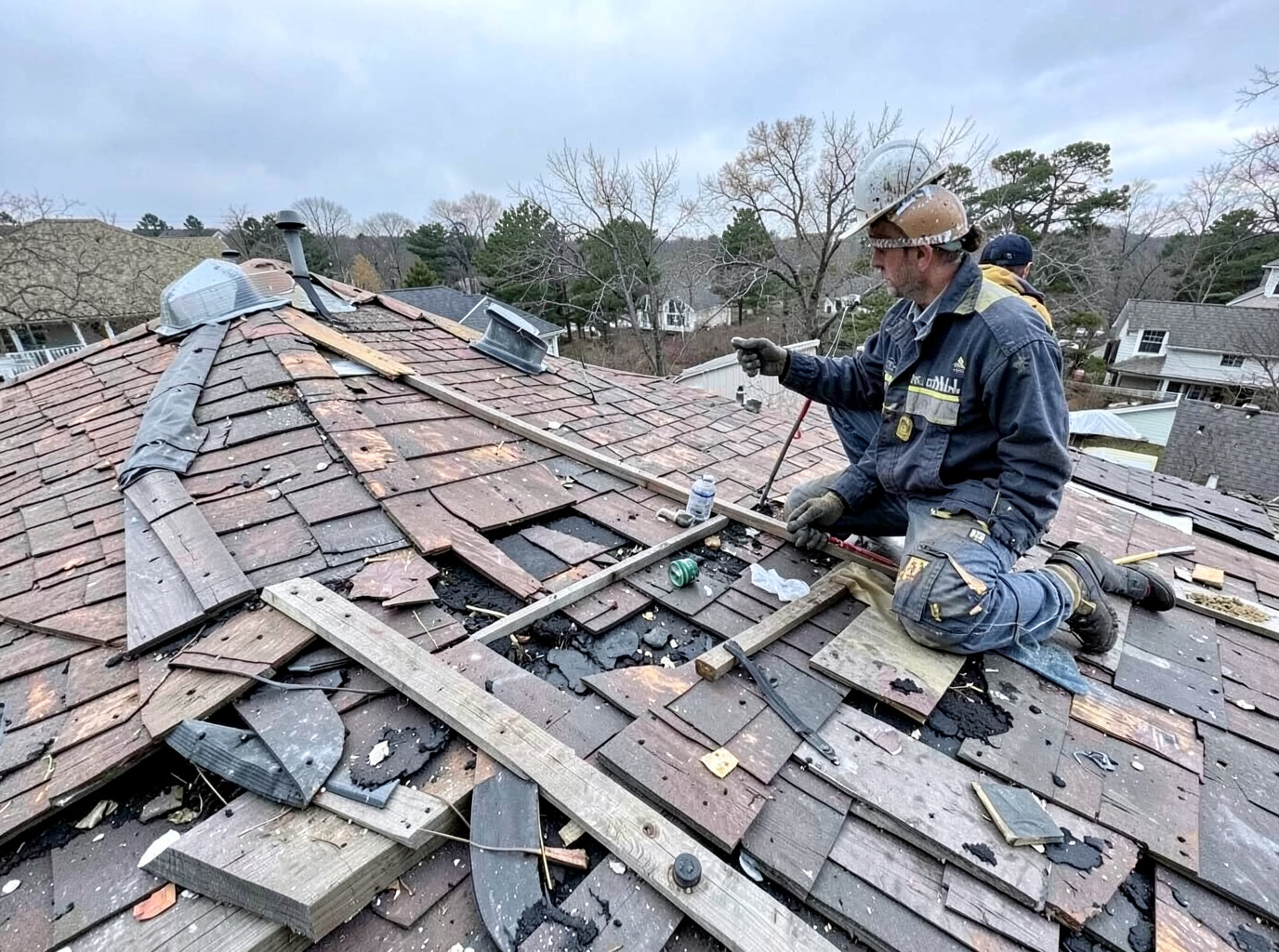
St. Joseph homes built before 1950 often feature steep pitches and older asphalt or wood shingles that take direct hits from hail and straight-line winds common in Buchanan County. After a storm, crews check for granule loss on shingles, cracked flashing around chimneys, and lifted edges that allow water under the decking. Ice dams from winter freezes followed by quick thaws add pressure on eaves in neighborhoods like the historic North End.
Wind-driven rain during spring thunderstorms frequently finds weak points at valleys and penetrations on two-story homes common along the Missouri River bluffs. Repair crews use moisture meters to locate hidden saturation in sheathing before replacing sections, since simply swapping visible shingles leaves rot that spreads during the next heavy rain. Local code requires matching existing shingle layers on overlays rather than full tear-offs in many cases.
Heavy debris from downed trees after tornado warnings can dent metal panels or break ridge vents on ranch-style homes in outlying Buchanan County areas. Technicians secure tarps the same day when possible to limit interior water damage, then return for permanent fixes once insurance adjusters inspect. Soil saturation around foundations in low-lying spots near the river also changes ladder placement and material staging during repairs.
Technician insight
In St. Joseph the thing that catches most people out with storm damage roof repair is hidden rot in the decking of pre-1940 homes along the bluffs. Wind-driven rain from the river direction soaks under lifted shingles and sits for weeks before anyone notices ceiling stains. Checking the attic right after the storm saves a lot of extra tear-off later.
Hail damage on a North End two-story
Wind and hail from a May storm lifted shingles along the east slope of a 1920s home. Inspection found bruised shingles plus saturated felt under the ridge. Crew replaced the damaged course, installed new step flashing at the dormer, and confirmed no active leaks remained.
Storm Damage Roof Repair Services We Offer
✓Hail Damage Assessment
On-site inspection of granule loss, bruising, and cracked shingles after Missouri hail events, with documentation for insurance claims on St. Joseph properties.
✓Wind Uplift Repair
Re-securing or replacing lifted shingles and damaged underlayment caused by straight-line winds common along the Missouri River corridor.
✓Emergency Storm Tarping
Same-day placement of reinforced tarps over compromised sections to prevent further water intrusion into older Buchanan County homes.
✓Valley and Flashing Replacement
Repair of storm-damaged metal valleys and step flashing that allow leaks around chimneys and dormers on two-story St. Joseph houses.
✓Debris Impact Shingle Repair
Targeted replacement of shingles punctured by falling limbs or hail in neighborhoods with mature trees throughout the St. Joseph area.
Storm Damage Roof Repair Cost in St. Joseph, MO
| Service | Typical Range | What Affects It |
|---|---|---|
| Minor shingle and flashing repair | $450–$950 | Single slope or small section on one-story homes |
| Emergency tarping | $250–$450 | Labor and materials for same-day placement |
| Full slope replacement after hail | $1,800–$3,600 | Includes underlayment on homes with two layers maximum |
| Valley and chimney flashing repair | $600–$1,100 | Metal work on two-story structures |
Ranges are typical for St. Joseph, MO and confirmed with an exact written quote before any work starts.
How it works
- 1
Initial Inspection
Walk the roof and attic to document hail bruising, wind damage, and active leaks while noting any prior layers on older St. Joseph homes.
- 2
Documentation For Insurance
Photograph damage from multiple angles and prepare a scope that aligns with Buchanan County permitting requirements for storm claims.
- 3
Temporary Protection
Install tarps or secure loose sections the same day when weather threatens additional interior damage.
- 4
Permanent Repair
Replace damaged materials, restore flashing, and verify the decking remains sound before final walkthrough.
Pricing
Upfront written quotes after on-site inspection, with ranges based on extent of visible and hidden damage.